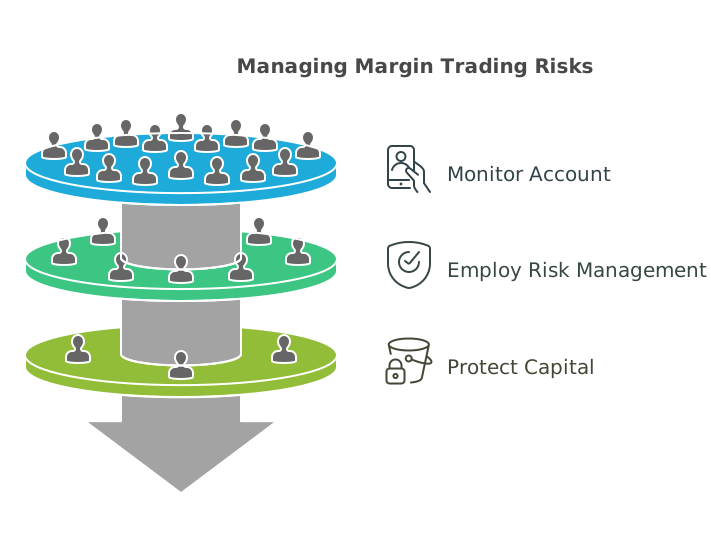
When trading with leveraged accounts, it’s essential to familiarize yourself with your broker’s Margin Call Level and Stop-Out Level. These thresholds vary between brokers and significantly impact how your trades are managed during adverse market conditions.
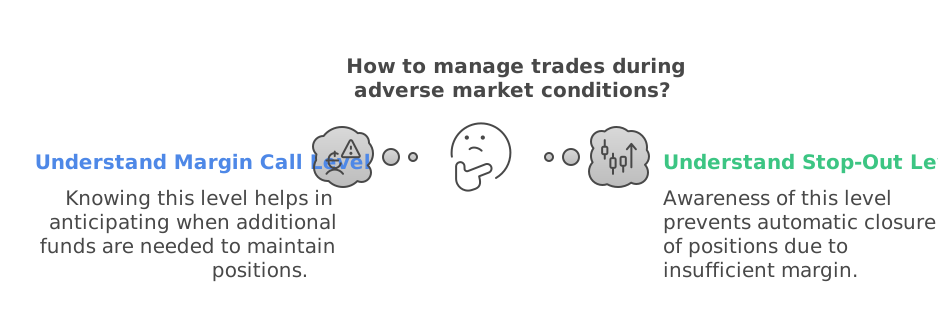
Why Margin Call and Stop-Out Levels Matter
Many traders dive into trading without understanding their broker’s margin policies. Ignoring these levels can lead to unexpected and costly outcomes, including the sudden liquidation of your positions.
Different brokers handle margin-related events in unique ways. Here’s how these thresholds typically operate:
Margin Call Level:
Serves as a warning when your account’s equity falls below a specified percentage of the required margin.
Traders are often notified to either add funds or close positions to avoid further risks.
Stop-Out Level:
The point at which the broker takes automatic action to close your positions.
This ensures that your account doesn’t fall into a negative balance.
Two Common Broker Approaches to Margin Policies
1. Combined Margin Call and Stop-Out Level
Some brokers treat the Margin Call Level and Stop-Out Level as the same. In this case:
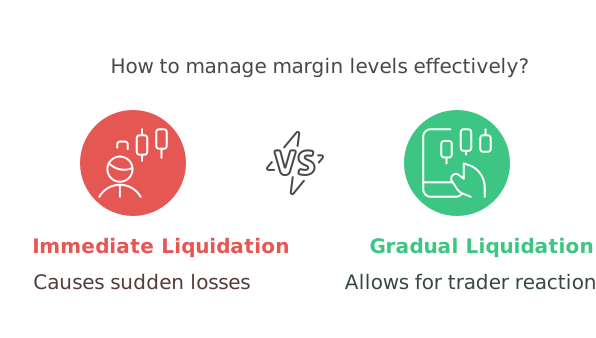
Threshold: If your Margin Level drops below a specific percentage (e.g., 100%), the broker immediately begins liquidating positions.
No Warning: There are no notifications or warnings before liquidation starts.
Example:
Margin Call/Stop-Out Level: 100%.
If the Margin Level drops below 100%, the broker closes trades automatically without prior notice.
2. Separate Margin Call and Stop-Out Levels
Other brokers provide a more structured margin policy by separating the two levels.
Thresholds:
Margin Call Level: A warning issued at a higher threshold (e.g., 100% Margin Level).
Stop-Out Level: Automatic liquidation occurs at a lower threshold (e.g., 20% Margin Level).
Example:
If the Margin Level falls below 100%, the broker issues a warning, allowing traders to act by either:
Depositing more funds.
Closing some trades to free up margin.
If no action is taken and the Margin Level drops to 20%, the broker begins liquidating positions to restore account stability.
This method provides traders with more time to manage their positions and reduce the likelihood of liquidation.
What Happens During a Margin Call?
The meaning of a Margin Call depends on your broker’s policies. Here are the two scenarios:
Separate Margin Call and Stop-Out Levels:
The Margin Call is a warning that your equity has dropped below the required percentage.
No automatic action is taken unless the Stop-Out Level is reached.
Combined Margin Call and Stop-Out Level:
The Margin Call directly triggers the automatic closure of positions, starting with the least profitable.
The process continues until the required margin level is restored.
Key Responsibilities of Traders
Regardless of your broker’s policies, the ultimate responsibility lies with you as a trader. To avoid unwanted liquidations:
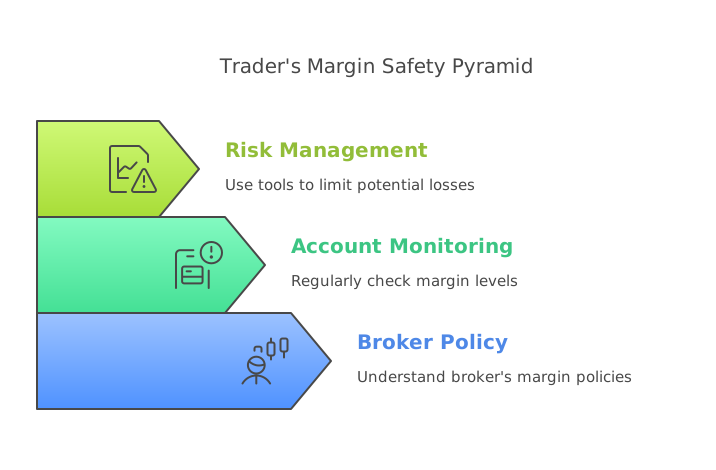
Understand Your Broker’s Policy:
Verify your broker’s Margin Call and Stop-Out Levels before opening an account.
Monitor Your Account:
Regularly check your margin levels, especially during volatile markets.
Use Risk Management Tools:
Stop Losses: Set stop-loss orders to limit potential losses.
Position Sizing: Avoid over-leveraging by keeping position sizes proportional to your account balance.
Proactive Steps to Avoid a Stop-Out
A Stop-Out occurs when your account equity can no longer sustain your open positions. However, with proper preparation, this situation is avoidable:
Maintain Sufficient Margin: Keep extra funds in your account to buffer against market volatility.
Act Early on Margin Calls: Treat a Margin Call as an opportunity to stabilize your account before liquidation occurs.
Diversify Trades: Avoid putting all your margin into a single position, as concentrated risk amplifies losses.
Conclusion
Your broker’s Margin Call and Stop-Out Levels are critical components of leveraged trading. Ignoring them can result in severe consequences, such as unexpected position closures or significant losses. By understanding these policies, monitoring your account diligently, and employing sound risk management strategies, you can minimize the risks associated with margin trading and protect your capital.
Remember, the responsibility for managing your margin account ultimately rests with you. Stay informed and prepared to avoid falling into the pitfalls of poorly managed trades.